
Spill something on the carpet and the clock starts. In 19 years of cleaning Auckland homes, the biggest thing we see go wrong isn't the stain itself — it's the panic scrubbing that follows. Grind a spill into the pile and you drive it past the fibres into the backing, where no amount of blotting reaches it. This is a quick-reference for the stains people Google most: the method that works for each, and the mistakes that set a stain for good.
The one rule that beats every product: blot, don't rub
Whatever you've spilled, get to it fast and lift it, never grind it. Press a clean white cloth or a wad of paper towel straight down onto the spill and let it soak upward. Work from the outside of the stain toward the middle so you don't spread the edges, and keep moving to a clean part of the cloth as it loads up. Scrubbing in circles frays the pile and pushes liquid deeper — once it's in the backing, it wicks back up to the surface days later as a shadow. Blotting is slower and it feels like you're doing less. You aren't.
Two more habits first. Always test any cleaning solution on a hidden patch — inside a wardrobe, under a sofa — because some dyes and wool carpets react badly. And rinse when you're done: leftover detergent is sticky and attracts dirt, so a spot you "cleaned" turns grey within a fortnight. Cool water, blotted out, clears the residue.
Red wine
Red wine is the dinner-party classic. Blot hard straight away, then dilute: a splash of cold water or even soda water loosens the pigment so you can blot more of it out. The old trick of covering a fresh spill with salt genuinely works — the salt draws the wine up as it dries, and you vacuum it away. For what's left, mix one part white vinegar, one part dish soap and a couple of parts warm water, work it in gently and blot. Do not use hot water and do not scrub; red wine spreads in a heartbeat. If you have a bottle of white wine handy, a dab neutralises the red pigment before you blot — an old bartender's fix that holds up.
Coffee and tea
Coffee leaves a yellow-brown tint that looks dried-in but usually comes out with patience. Blot the spill, then treat with the same vinegar–dish-soap–water mix, applying a little at a time and blotting between each. Milky or sugary coffee needs a rinse afterwards or the residue goes sticky. If a faint tan shadow survives, that's the tannin — the same thing that stains a mug — and it often needs a professional hot-water extraction to pull it fully from the pile.
Pet accidents
With pet messes you're fighting two things: the stain and the smell. Lift solids first, then blot the liquid out thoroughly — the more you remove now, the less soaks into the underlay. Skip ordinary detergents and reach for an enzyme-based pet cleaner: the enzymes break down the proteins that cause the odour, which is why a normal clean can leave a spot smelling fine to you but still screaming to the dog, who then re-marks it. Soak the area, leave it the full dwell time, then blot and dry. Never use anything with ammonia — it smells like urine to pets and invites a repeat.
Grease, oil and butter
Grease won't budge with water because it repels it. Start by drawing out as much as you can: sprinkle the spot generously with baking soda or cornflour, leave it 15 minutes to absorb the oil, then vacuum. Follow with a few drops of dish soap — which is built to cut grease — worked in with a damp cloth and blotted out. Repeat rather than drowning the spot in one go. A stubborn, set-in oily mark is one of the jobs where a machine earns its keep.
Ink and pen
Ballpoint ink responds to isopropyl alcohol or, in a pinch, a clear (non-oily) hand sanitiser. Dab — never pour — a little onto a cloth and press it onto the mark, lifting the dissolved ink onto the cloth and moving to a clean section each time so you don't spread it. It can take several passes. Resist the urge to flood the area; alcohol loosens some carpet dyes too, so go slow and blot often.
What NOT to do
- Don't rub or scrub — you fray the pile and drive the stain into the backing.
- Don't use hot water on egg, milk or other proteins; heat sets them.
- Don't pile on neat bleach or supermarket "miracle" sprays without testing a hidden patch — many strip colour.
- Don't over-wet. A soaked carpet dries slowly, and in a damp Auckland winter that's how you get mould and a musty smell in the underlay.
- Don't leave detergent behind. Always rinse and blot dry.
When to call a professional
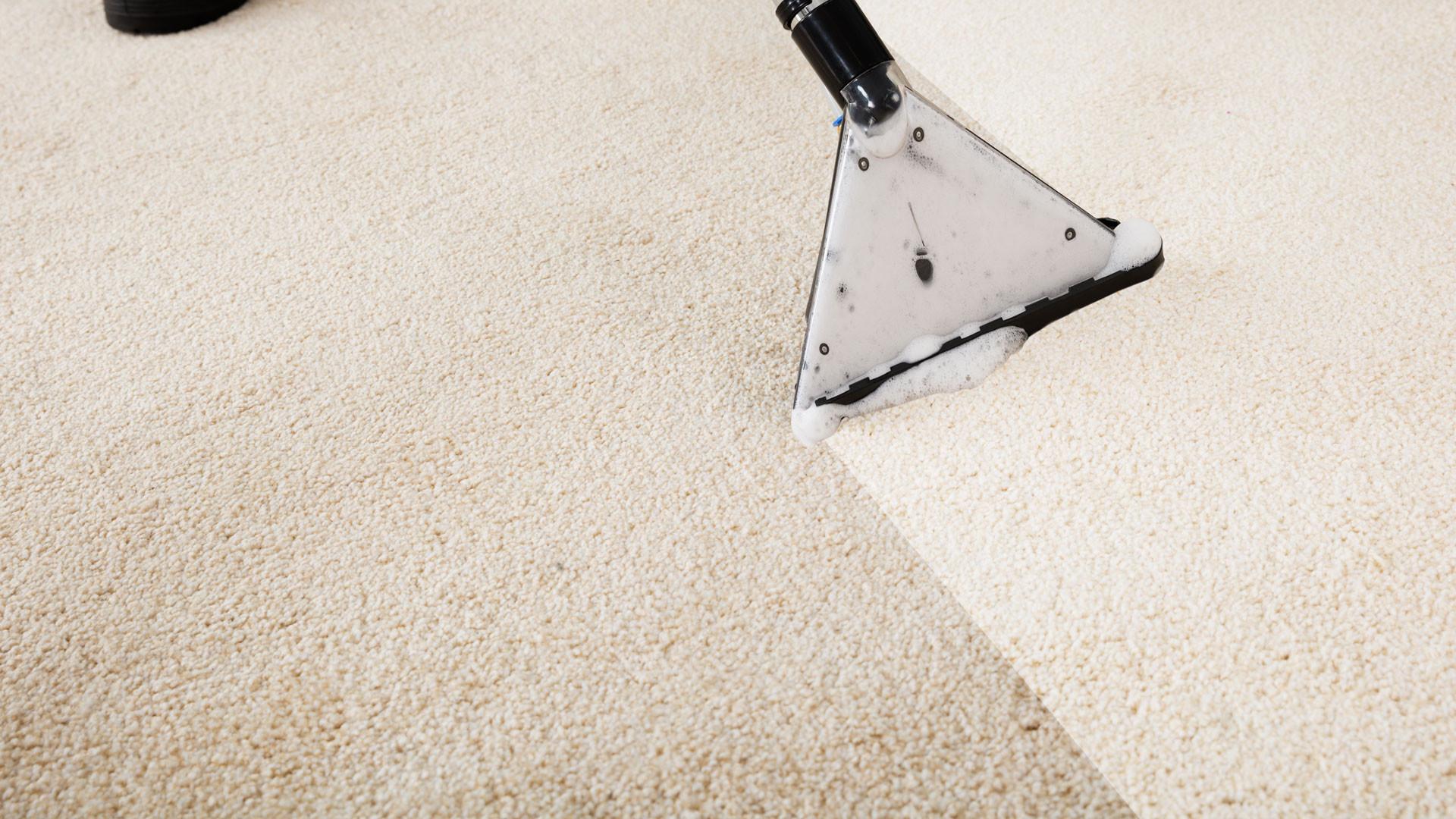
Home methods handle fresh, surface-level spills well. Call in a pro when a stain has set, keeps wicking back after it dries, covers a large area, or sits on wool or an expensive rug you can't risk. This is where our carpet and upholstery cleaning does what a DIY bottle can't. Mint runs a real truck-mounted hot water extraction machine — this is no Rug Doctor hire unit. It injects heated solution deep into the pile and vacuums it straight back out, lifting the stain, the dirt and most of the moisture in one pass, so the carpet dries in hours rather than days. If you'd rather not gamble on a set-in mark, book before you make it worse. Our guide on how often to clean your carpets explains how a regular deep clean keeps spills from ever setting in.
Stain won't shift?
Mint's trained, insured and security-checked cleaners have treated carpets in thousands of Auckland homes. Let us take a look before a mark becomes permanent.
Prefer to talk it through? Call us on 0800 297 253.